
Investors shunned shares of Bajaj Finance on Friday, a day after the non-banking financial company (NBFC) reported a sharp contraction in its net interest margin (NIM) for the March quarter of the financial year 2023-24 (Q4FY24). The losses accounted for a fifth of the benchmark S&P BSE Sensex's 609-point loss. Most brokerages have tamed their earnings expectations for the next couple of quarters, after the management said it expected the pressure on NIMs to continue in the near term.

The reason for both the officials being sent on leave is the same - an anonymous complaint received by the market regulator against the agency.

Understanding tax residency rules and maintaining proper documentation is imperative to ensure smooth tax compliance.
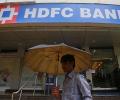
While HDFC Bank has vowed to recoup its lost market share in the credit card segment in three to four quarters by aggressively sourcing new cards, brokerages believe it is a little hard to come by, given how competitive the landscape has become, with other players in the market becoming equally aggressive to gain market share. Kotak Institutional Equities in its report on Monday said, "We would like to believe that the recovery in market share is likely to be gradual, if any. "All the key players, including Axis Bank, are now willing to expand their credit card portfolios as they have tested quite well against Covid-19."

Investors should view any bounce-back in bank stocks as an opportunity to exit the pack, analysts suggested, as the worst may not be over yet. The recent quarterly results of HDFC Bank and Axis Bank disappointed the Street, triggering a marketwide selloff by foreign institutional investors, especially in banking counters. While HDFC Bank, which was the anchor for the market correction during the past week, ended 2 per cent higher amid short covering on Wednesday, Axis Bank's shares settled 3 per cent lower.

Bank credit growth declined to 8.5 per cent in January from 13.5 per cent in the year-ago period.

'We are cautious only on sub-sectors that have seen massive melt-up during the past six months.'

Moody's Investors Service on Wednesday affirmed the ratings of two major Indian IT services companies, Tata Consultancy Services Limited (TCS) and Infosys. In two separate statements, Moody's also retained stable outlook for both the companies. Moody's expects Infosys' revenues to climb by around 13 per cent for the financial year ending March 31, 2023, but moderate to around 8 per cent in the next 2024 fiscal.

'We are confident that over the next few years the government will strike a fine balance between populist measures and growth, and manage coalition partners well.'

Had you invested Rs 10,000 each in JSW Steel, Titan Company and Bajaj Finance 20 years ago, when they were just penny stocks (trading below Rs 10), you would have become a millionaire by now.

Poor earnings show in the September quarter (Q2FY24), with hints of likely weakness in asset quality going ahead, forced analysts to cut earnings estimates of SBI Cards and Payment Services (SBI Card). On the bourses, shares of the State bank of India arm tumbled 7.4 per cent to Rs 732 apiece on the BSE in the intraday trade as investors factord in near-term concerns. Analysts at Motilal Oswal Financial Services, for instance, slashed SBI Card earnings by 8 per cent and 10 per cent for FY24 and FY25, respectively, as they expect the company to face pesistent magin pressure.

Despite multiple headwinds at the start of 2023, the Indian markets delivered a strong performance, posting 19-20 per cent growth for the year. Even as new records were set, investor sentiment remains strong going into 2024, given the lower inflation, expectations of steady to lower interest rates, higher economic growth, and strong inflows. However, the overriding concern for most brokerages is valuations.

Even as the slowdown in the information technology (IT) services sector deepens, banking, financial services and insurance (BFSI), as well as oil and gas companies, emerge as the primary drivers of corporate earnings in the country. The IT services sector's share in corporate earnings declined to a five-year low of 17.4 per cent in the second quarter (Q2) of 2023-24 (FY24), whereas banks and finance companies accounted for 46.5 per cent, and oil and gas firms contributed 16.8 per cent. At their peak, IT services firms like Tata Consultancy Services (TCS), Infosys, HCLTech, and Wipro represented just over a third of the combined net profit of all listed companies in the Business Standard sample.

The net leasing of Grade-A commercial office space in India will stagnate this financial year at 32-34 million square feet, with global uncertainties brewing caution among key tenant categories, according to the latest Crisil Ratings report. Major seven cities in India - Bengaluru, Chennai, Hyderabad, Kolkata, Mumbai Metropolitan Region (MMR), National Capital Region (NCR) and Pune - had Grade-A office space with an operational stock of around 705 million square feet as of March 2023. India's commercial office space is dominated by technology companies, with information technology (IT) and IT-enabled services (ITeS) companies occupying 42-45 per cent of the operational stock.

The number of frauds in the banking sector during the first half of the current financial year has increased substantially to 14,483 cases, although the amount involved is only 14.9 per cent of the previous year's amount, according to a RBI report. The report on Trend and Progress of Banking in India 2022-23, underlined the need to protect the banking system and the payments system from the risks of fraud and data breaches emanating from cyber threats. As many as 14,483 frauds were reported involving an amount of Rs 2,642 crore in the first half of current financial year, as compared to 5,396 cases (Rs 17,685 crore) in the same period a year ago.

If used without much care credit cards can become debt traps. But there are ways to use them to your advantage, says Rajiv Raj

'We are also conducting ongoing training and grooming at the branch level to pre-empt such cyberattacks.'

Here are four ways to keep your credit score in the green

In order to be eligible for a loan when you really need one, it is imperative to maintain a good credit score. By having a good mix of debt and servicing it regularly, you can maintain a good credit score and be loan ready at all times.

Credit card payments to buy fuel at petrol pumps will from October 1 not get a 0.75 per cent discount that State-owned oil companies had introduced more than two-and-a-half years back to promote digital payments.

With the reality of coalition politics staring the BJP in its face, this was inevitable, points out Ramesh Menon.

The global ratings agency, however, cautioned that high debt burden remains a constraint on the country's credit profile.

IFMR Capital previously pioneered the multi-originator securitisation.

Every patriot should learn from our history and recognise that celebrating size will neither negate nor obscure the huge economic challenges that India faces, asserts Rathin Roy.

There is no such thing as 'free' credit cards. Most of the charges associated with your card are not even told upfront to you. Knowing about these various fees and charges will put you in good stead and help you use your card prudently.

While analysts assessed One97 Communications (Paytm) Q1FY24 results as in-line with guidance, the market was disappointed and the stock fell by around 5 per cent. Paytm reported a net loss of Rs 360 crore, but revenue grew 39 per cent year-on-year (YoY) to Rs 2,340 crore. It was supported by strong growth in gross merchandising value (GMV), higher disbursements and the addition of subscription devices.

The corporate credit rating with a positive outlook, BBB, is higher than India's rating and "highlights the financial robustness of our business model and operating strengths of the company," TCS informed the Bombay Stock Exchange. According to S&P, the company has strong liquidity, with cash and bank deposits of Rs 1,230 crore (Rs 12.3 billion), about 9.4 per cent of total assets as on March 31, 2007.

'The attempt to build a negative narrative about India's economic performance is disingenuous.' 'For the investors as well as the targeted beneficiaries of welfare schemes, the ground reality is very different,' argues Rajiv Kumar, vice-chairman, NITI Aayog.

Six years after the rollout of the biggest indirect tax reform in India, Goods and Services Tax (GST) revenue of Rs 1.5 lakh crore every month has become a new normal and tax officers are focusing on dealing with fraudsters who are adopting newer modus operandi to game the system, causing loss to the exchequer. To apprehend black sheep, who operate as syndicates and create fake entities on the basis of forged documents to claim input tax credit (ITC), tax officers have started using data analytics, artifical intelligence and machine learning aiming to curb evasion, which was over Rs 3 lakh crore since inception of GST. It was over Rs 1 lakh crore in 2022-23. Thinktank Global Trade Research Initiative (GTRI) said the most critical pending GST reform is upgradation of GST Network to prevent fake supplies and fraudulent claims of Input Tax Credit (ITC).

In March this year, Worldline India launched Vabox (Voice Alert Box): merchants will now get instant audio alerts on the settlement of UPI (Unified Payments Interface) payments via QR codes in languages of their choice when customers check out. "They needn't worry whether the amount has been credited to their account," says Gulshan Pruthi, the firm's executive vice-president. The French payments giant will roll out 500,000 Vaboxes in the initial phase.
'Auto, pharma, and industrials have delivered well in the recent quarter, while businesses like quick-service restaurants, consumer staples, and durables have underperformed in volume growth.'

The richest one per cent in India now own more than 40 per cent of the country's total wealth, while the bottom half of the population together share just 3 per cent of wealth, a new study showed on Monday.

Automotive (auto) major Mahindra & Mahindra (M&M), which is readying to launch nine sport utility vehicles (internal combustion engine/ICE), seven Born Electric Vehicles (BEVs), and seven light commercial vehicles by 2030, has outlined an investment of Rs 27,000 crore in its auto business between 2024-25 (FY25) and 2026-27 (FY27). Over the next three years, the company will deploy Rs 37,000 crore, including its auto business, farm business (Rs 5,000 crore), and service business (Rs 5,000 crore).

'Why should we disclose classified information to satisfy those who doubt our Hydrogen Bomb capability?'

Even as banks and finance companies are reporting record-high earnings, their weighting in the benchmark National Stock Exchange Nifty50 Index has seen a downward trajectory. Investors expect a stronger performance from other sectors in the new year. Currently, banking, financial services and insurance (BFSI) companies collectively hold a weighting of 34.5 per cent, down from 36.7 per cent at the end of December 2022 and a record high of 40.6 per cent at the end of December 2019. This represents the sector's lowest weighting in the index since December 2021 when it stood at 33.7 per cent.

The richest one per cent in India now own more than 40 per cent of the country's total wealth, while the bottom half of the population together share just 3 per cent of wealth, a new study showed on Monday. Releasing the India supplement of its annual inequality report on the first day of the World Economic Forum Annual Meeting in Davos, rights group Oxfam International said that taxing India's ten-richest at 5 per cent can fetch entire money to bring children back to school. "A one-off tax on unrealized gains from 2017-2021 on just one billionaire, Gautam Adani, could have raised Rs 1.79 lakh crore, enough to employ more than five million Indian primary school teachers for a year," it added.

Often, individuals are offered credit cards with great schemes directly by the bank.

Scams happen with high regularity because the price of getting caught is insignificant. Aggrieved investors run from the police to already clogged courts to find redress for issues for which financial regulators have been specifically set up. For over 3,750 years we have known what to do, but we don't do it, observes Debashis Basu.

'I found it unbelievable that L&T said 45,000 jobs were waiting to be filled because of unavailability of suitable skillsets.' 'So, when the Opposition sweepingly says there are no jobs, I'm sorry... I'm not saying it's raining jobs, but there are jobs. The (skill) gap has to be bridged.'

'They can transition from short to long-duration funds when the yield curve normalises.'
 © 2026 Rediff.com - Advertise with us - Disclaimer - Privacy Policy - Sitemap - Feedback - About us - Terms of use - Grievances